 | Dear ~~first_name~~,
It’s a big week in TASA-land!
We’re delighted to announce that the call for submissions for TASA 2026 is now open. We look forward to seeing the breadth, depth and imagination of sociology on display this year.
There are also several important dates approaching:
- TASA Thursdays on 19 February and 26 February – two opportunities to connect, learn and engage.
- 2 March – deadline for nominations for our two Book Awards.
- 1 March – deadline for Thematic Group funding applications.
In this edition, you’ll also find:
- Some new Reflections from our TASA 2025 bursary recipients, sharing how support from the Association has shaped their conference experience.
- A warm welcome to five new members who have joined us this week.
- Celebrations of members’ recent publications, including a new book Trans Lives by fellow member Raewyn Connell.
- The introduction of a new co-convener for our Early Career Stage Group.
- Thanks to those conveners who have chosen to continue leading their Thematic Groups for another term.
- An important call for members to step into leadership, with four Thematic Groups currently without conveners and at risk of disbanding — including our largest group, Genders & Sexualities.
- A welcome to the new conveners of the Sociology of Youth Thematic Group.
- Announcements of upcoming events across our community.
As always, TASA thrives because of the collective energy of its members — through scholarship, leadership, collaboration and care. Thank you for being part of it. Having said that, in case you are not aware, we encourage you to share details of your latest publications and news via this newsletter. No publication is too big or too small. Any mention of sociology is of value to our association, and to the discipline, so please do email through details of your latest publication/s (fully referenced & with a link, where possible), impact & outreach content, events, sector news, job adverts etc. for the next newsletter, to Sally in TASA Admin (right click to retrieve the email address). Usually, the newsletter is disseminated every Thursday morning so if you email content by Wednesday evening it will usually make it in the next day.
Warm regards,
TASA Team
| TASA 2026 - SUBMISSIONS OPEN
| Earlier this week, you should have received our first call for submissions for TASA 2026, which promises to be an inspiring event bringing together the sociological community to explore the theme: Revolution and Resistance. This year’s conference theme asks: What can sociology offer to understandings of resistance and revolution? How can we read resistance and revolution expansively, productively and generatively in pursuit of a better world?
General Abstract Submission Deadline: 24 April
These include thematic group presentations, book launches, photography exhibitions and workshops.
Panel Proposal Abstract Submission Deadline: 29 March
This is for panel proposals only.
More details about the conference, including the submission links, are available on our TASA 2026 web pages here..
Note, the conference bursary applications are now open as well. You need to submit an abstract before applying for a bursary.
| | TASA THURSDAYS | Thursday 19 February | 12:30PM AEDT |
Join us next week 12:30pm (AEDT) on Thursday 19th February for this month’s TASA Thursdays webinar, Schooling misogyny: Examining the influence of the manosphere in education settings. Stephanie Wescott and Steven Roberts, winners of the 2025 Sociology in Action Award, explore how misogyny is reshaped and normalised within school contexts, tracing links between online manosphere ideologies and offline harm. This timely session examines how gender-based violence is minimised in institutional settings.
CLICK HERE TO REGISTER | | | | TASA THURSDAY POSTGRAD | Thursday 26 February | 12:30PM AEDT |
Join us for this month’s TASA Thursday Postgraduate Session, Researching Sensitive Topics: Ethics, Care, and Boundaries.This reflective and practical webinar invites sociology postgraduates and early career researchers to explore the ethical complexities of qualitative research. Our panellists will discuss care, responsibility, emotional labour, and boundary-setting across fieldwork, analysis, and writing, offering insights into managing wellbeing while maintaining analytical rigour.
| | | As a friendly reminder, the nomination deadline for our two TASA Book Awards is fast approaching; March 2nd:
- Stephen Crook Memorial Prize: Awarded for the best authored book in Australian Sociology.
- Raewyn Connell Prize: Awarded for the best first book by an author in Australian Sociology.
Note, if a book is eligible for the Raewyn Connell Prize it may also be nominated for the Stephen Crook Memorial Prize (i.e. can nominate one book for both prizes but would need to supply 12 copies of the book - 6 for each book prize panel).
We will include details about TASA's other 2026 Award opportunities in a subsequent newsletter.
| TASA 2025 Bursary Recipient Relections
This week, we are pleased to share TASA 2025 bursary recipient reflections from the following members:
| A warm TASA welcome to this week's new members, Kristian Hollins, Samantha Marshall, Don McArthur and Kristy Muratore. We hope you are enjoying your first TASA newsletter :)
| Visibility, influence, and dissemination beyond TASA.
| | Raewyn Connell (2026) Trans Lives: Social Realities across the Globe. Polity Books. | 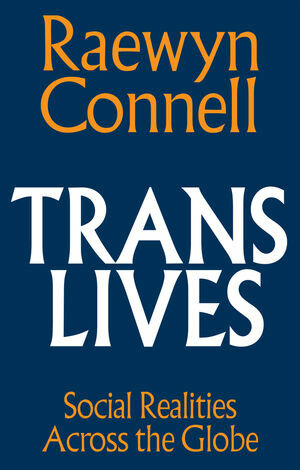 | Trans Lives is about practical living, poverty, power, creativity, solidarity, and - unfortunately - hatred and fear. The last ten years have seen an astonishing surge of anti-trans aggression from dictatorships, cynical politicians, right-wing media, religious bigots and violent militias. A re-think of gender transitions and their contexts has become urgent. Trans Lives starts with grass-roots stories of transitioning groups from seven countries (across fifty years and four continents), plus several from the Internet. The book then discusses gender itself, the tensions in the interplay of bodies and societies, and the gritty practical side of gender transitions. It then moves to the wider context: the global story of trans medicine, the social structures that shape trans lives, and the sources and tactics of the anti-trans surge. Finally it shows the creativity of trans organizing around the world, examines relations with allies, and considers paths towards a different future.
The book deals with some tough issues, but Raewyn has tried to write it in an accessible style. She hopes it will be of value to a variety of readers: first, trans women, trans men and other trans groups themselves; family, friends, workmates and neighbours; professionals such as teachers, health workers and counsellors; policymakers, students and researchers; and anyone who is concerned about the public debates involving trans lives.. Read on...
| | |
Book Chapters
Journal Articles
Tanner, C., Toffoletti, K., Grahame, J., Pienaar, K., & Robards, B. (2026). Media reporting of cancel culture: a narrative anatomy of Billie Eilish’s cancellation. Social Semiotics, 1–17. https://doi.org/10.1080/10350330.2026.2627178 (open access).
Cook PS, Thorneycroft R, Humphrys E, Asquith NL, Stafford L, Thomson MJ, Soldatic K, and Korobacz RJ (2026) Disabled and academic: a collaborative autoethnography on ableism and cruel optimism within Australian higher education. Journal of Further and Higher Education. epub ahead of print. https://doi.org/10.1080/0309877X.2026.2626469 (open access).
Brosnan, C., Buykx, P., Cummins, A., Tickner, C., Gillett, K., Hill, L., & Newnham, E. (2025). ‘Then we forget to sit on our hands’: how epistemic injustice impedes midwives’ and students’ capacities to humanize birth. Health Sociology Review, 1-17.
https://www.tandfonline.com/doi/full/10.1080/14461242.2025.2599806 (open access).
Gardiner, J., & Byron, P. (2026). Supporting LGBTQ+ young people on social media in times of heightened visibility: challenges, opportunities, strategies. International Journal of LGBTQ+ Youth Studies, 1–21. https://doi.org/10.1080/29968992.2025.2600340
Ridgway, Alexandra. (2026). Leveraging expat bubbles: Migrant women’s information-gathering practices within Hong Kong spaces of expatriate privilege from arrival to post-divorce. Current Sociology. OnlineFirst. https://doi.org/10.1177/00113921251411547 (open access).
Li, B., Li, Y., Morris, A., Katz, I., & Huang, Y. (2026). Assisted Self-Governance: The CASS Model of Volunteering among Older Immigrants. Journal of Sociology, 0(0). https://doi.org/10.1177/14407833251405004 (open access).
Ridgway, Alexandra. (2025). Performing Under Pressure: Probationary Migrant Wives and Marital Expectations in Hong Kong and Melbourne, Australia. Transitions: Journal of Transient Migration. OnlineFirst. https://doi.org/10.1386/tjtm_00081_1
Barnes, A., Cook, P.S., Padgett, C. and Ziebell, J.M. (2025) ‘I am trying so hard to smile’: Ableism and feeling rules when living with traumatic brain injury, Scandinavian Journal of Disability Research, 27(1): 635-47. https://doi.org/10.16993/sjdr.1347 (open access).
Op-ed / Commentary
Podcasts
On World Cancer Day, fellow member Dr Na'ama Carlin as well as Prof. Louise Chappell joined the global conversation on this year’s theme ‘United by Unique’. Speaking on The Lancet’s podcast with editor Vania Wisdom, they shared their experiences of receiving a cancer diagnosis, and the importance of including a patient-centred approach to cancer care, and how we can improve Cancer World for patients, carers, and health workers. You can access the podcast here.
| Health Sociology Review: Call for new editorial team
| As a reminder, applications are invited for the editorship of Health Sociology Review (HSR) for the three-year term 2027 - 2029.
Transition arrangements will begin later in 2026, although the content for the first issue of 2027, and possibly the second, will be finalised by the out-going editorial team.
The application deadline is Monday 22nd June, 2026.
The full details of the call are available on TASAweb here.
| New member Samantha Marshall joins the Early Career Stage Group as Co-Convenor with Alexander James. We are delighted to welcome Sam in this role, and look forward to supporting the work of our Career Stage Groups in 2026. The Convenors of the Student Career Stage Group have met to make plans for 2026, and our Retired Career Stage Group meets regularly online. If you have not yet joined a Career Stage Group, please do email Ali at membership@tasa.org.au and she can sign you up, or log in to the members' area of the website and select the group you'd like to join.
| | | We continue to seek Convenors for the Mid Career Stage Group. If you've been working in the field of Sociology for 10 or so years, and have ideas around ways to build networks and offer activities that would benefit you at work or in your research, with some support from TASA staff, please do get in contact with Ali via membership@tasa.org.au.
| If you are a thematic group (TG) convener, or a member of a TG, note that the next TG funding deadline is March 1. If you have any questions, please contact Sally Daly in TASA Admin as Naomi, our TG portfolio leader, is currently overseas on leave.
| Continuing Leadership of TASA Thematic Groups
| We’re delighted to recognise the conveners who have chosen to continue leading their thematic groups for another two-year term. Your ongoing dedication keeps our groups vibrant and ensures members have strong support for collaboration, research, and engagement. Some groups have also welcomed new co-conveners; for now, we would like to acknowledge those extending their term.
Thank you to:
Ageing & Sociology: Hien T Nguyen (looking for a co-convener)
Critical Disability Studies: Ricki Spencer
Critical Indigenous Studies: Joann Schmider
Environment & Society: Matshepo Molala (looking for a co-convener)
Families & Relationships: Cal Volks
Health: Zhaoxi Zheng & Miriam Dillon
Housing & Urban Studies: Lutfun Nahar Lata & Greta Werner
Media: Habib Moghimi
Risk Societies: Kate Manlik
Sociology of Education: Neville Buch & Terry-Ann Page
Sociology of Emotions & Affect: Belinda Johnson, Tamara Borovica & Natalie Kamber
Sociology of Music: Andy Bennett & Ben Green
Sociology of Sport & Leisure: Paul Bowell
Sociology of Youth: Imogen Harper
Sociology of Work, Labour & Economy: Yinghua Yu, Lutfun Nahar Lata & Naiyer Fatema Khanom
Teaching Sociology: Ricki Spencer
| At Risk: Groups Needing Conveners
| A few of our thematic groups currently don’t have conveners, and without leadership, these groups are at risk of disbanding. If you’re passionate about connecting with colleagues, supporting collaboration, and shaping the conversation in your area of sociology, this is your chance to step in.
Taking on a convenership is a rewarding way to contribute to TASA, and the discipline of sociology, guide discussions, and help your group thrive. Whether you’re an experienced member or newer to the Association, your involvement can make all the difference. Equally, no matter what sector you are based in, whether you are a student or a senior member, your contribution matters.
This week, we can confirm that the following four groups are without any conveners and are at risk of disbanding:
- Genders & Sexualities
- Remote, Regional & Rural Sociology
- Social Stratification
- Social Theory
Interested? Please contact Sally in TASA Admin to learn more about the groups in need and how you can help lead them. | New Conveners - Sociology of Youth Thematic Group
|
This week we’re featuring the Sociology of Youth Thematic Group, which brings together members interested in young people’s lives, transitions, identities, and the social structures that shape them.
We’re delighted to share that Imogen Harper is continuing in her role as convener, providing valuable continuity and experience. We also warmly welcome our new conveners: Julia Kantek, Maddison Sideris, Natalie Calleja, and John Marion. Together, this group brings a mix of established knowledge and fresh perspectives to the Sociology of Youth community.
We look forward to seeing the conversations, collaborations, and initiatives that emerge from this dynamic convener team. | | Dr Imogen Harper is a Postdoctoral Research Associate at the Sydney Centre for Healthy Societies (SCHS) and Charles Perkins Centre (CPC), both at the University of Sydney. Imogen's research focuses on experiences surrounding chronic illness and disability, youth, inequality, embodiment, and digital media, and she uses person-centred qualitative methods to situate these experiences in social and political narratives and power structures. Her research on young people's experiences of chronic illness examines how individuals' experiences of chronic illness interact with social and institutional expectations of illness, disability, and youth - including expectations that hide issues of illness and silence young people experiencing them. | | |  | | Doctor Julia Kantek is an early career researcher and lecturer in the School of Social Sciences at Western Sydney University and a member of the University’s Young & Resilient research centre. Her research is situated at the intersection of youth sociology, migration studies, and diaspora engagement, with a focus on how mobility and key life transitions (shaped by migration, education, work, and digital technologies) shape young people’s wellbeing, identities, and everyday lives. As co-convenor, Julia is looking forward to supporting the visibility of the group’s research and fostering a greater sense of community.
| 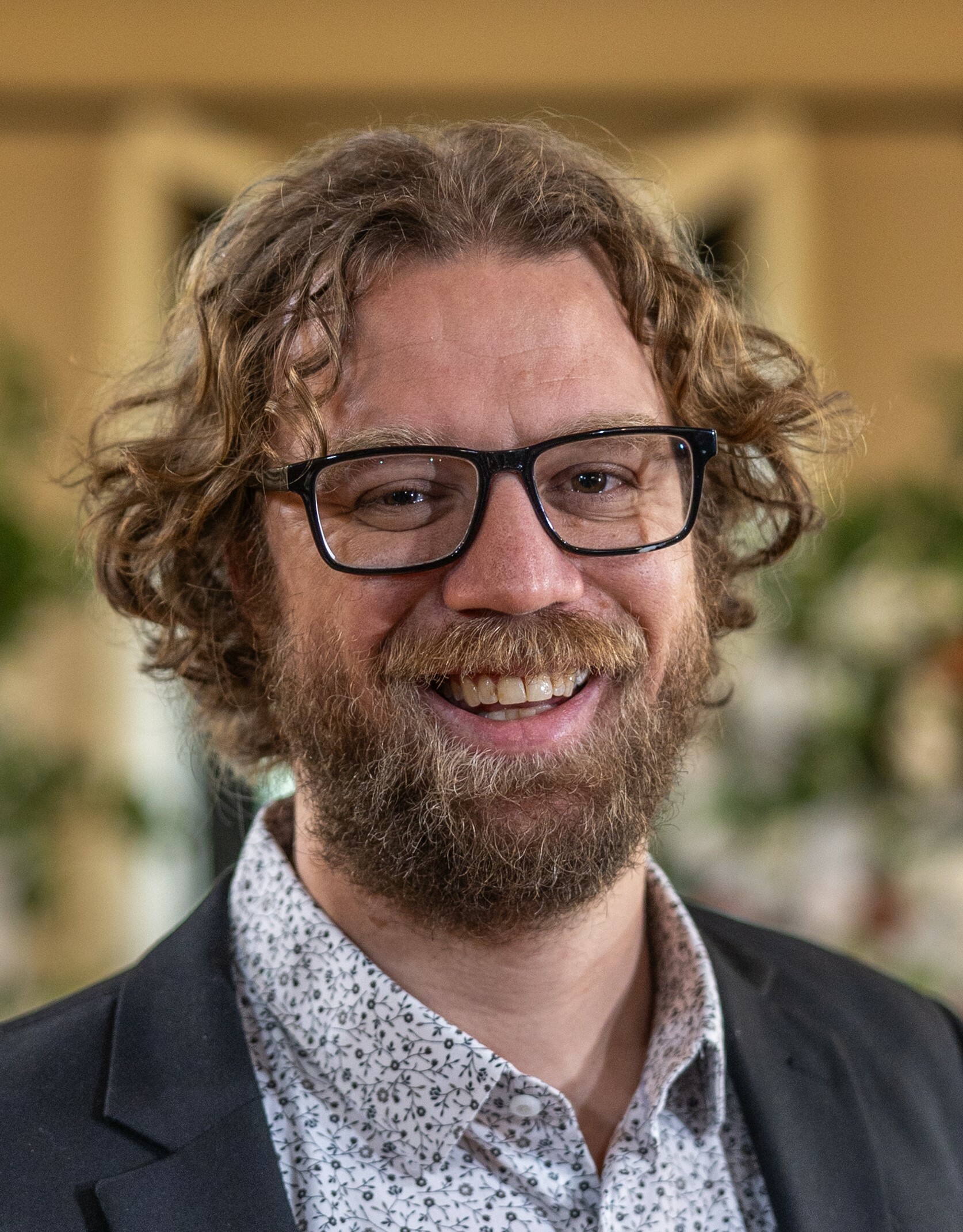 | | John Marion is a PhD candidate and lecturer with the Youth Work research group at Victoria University. His research examines how youth work addresses social exclusion through community building. He is also interested in young people’s experiences of belonging, and works directly with young people in social housing settings. John is excited by the opportunity that the thematic group has to build the body of knowledge and encourage researchers in light of the challenges faced by the higher education sector. | | |
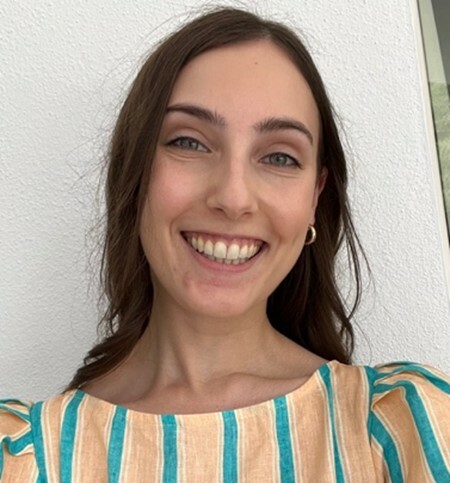 | | Maddison Sideris (she/her) recently completed her PhD at the Youth Research Collective (YRC), University of Melbourne, and is an associate teaching fellow in sociology at Deakin University. Her doctoral research draws on the longitudinal Life Patterns Project to examine young adults’ intimate lives through digital practices and the COVID-19 pandemic. Her research interests centre on how digital technologies shape relationships, socialities, and everyday life. As an early career researcher, Maddison has stepped into the co-convener role to build connections across the field, support collaboration, and bring youth sociologists together across institutions and career stages.
|  | Natalie Calleja is a PhD candidate at the Youth Research Collective, Faculty of Education, University of Melbourne. Natalie’s research uses participatory and community-engaged methodologies with young adults in Melbourne’s western suburbs to explore their stories and experiences of navigating the politics and boundaries of belonging in the context of histories, ongoing processes of settler colonialism, and shared and personal attachments to place.
| | |
| Scholarship Opportunities
| PhD Scholarship - Older adult abuse and migration
Edith Cowan University
A PhD student is sought to conduct a nested study as part fellow member Catriona Stevens's ARC-funded DECRA ‘Elder abuse and migration: Addressing the abuse of older adults to support safer ageing in multicultural Australia'.
The PhD project will focus on one or more community language groups in Australia. It will deliver new knowledge about how older adult abuse is understood, and how it manifests in Australian, homeland, and transnational contexts.
| Introducing Special Sections
Following the recent launch of a new paper type for Journal of Sociology, Teaching Notes, the JoS team are launching a new feature called Special Sections. They invite proposals at any time for thematic sections that consist of three or four standard 8,000 word papers, framed with a 4,000 word introduction. This will be an ideal format for developing and publishing outcomes from, for instance, a conference panel, a smaller research network, or papers in conversation around a hot topic. Special Sections are designed to be a smaller, more manageable version of a special issue and will feature in standard issues along with regular papers.
If you would like to pitch a special section, please write firstly to our Managing Editor, Dr Amy Vanderharst.
| The latest special issue of the Journal of Sociology explores ‘Equity in the creative industries’ in the context of a changing employment landscape in Australia. Inequality is central to understanding the social consequences and distribution of cultural work. The COVID-19 pandemic, rise of digital cultural production, growth of media sharing platforms, and instability of changes in government (and policy) have both disrupted and re-organised cultural work. The collection of articles aims to develop debate on competing imaginaries of the lived experiences of workers, and to shed light on the struggle and complexities of contemporary creative labour.
All articles have been published on open access and are available here.
| Other Events, News & Opportunities
| New: How to make a parliamentary submission and appear at an inquiry
The Australian Institute Policy School
Online, February 19 11am AEDT
This special, one-off Policy School is a guide on how to make an effective submission and give evidence before a committee, based on the Australia Institute’s experience participating in dozens of parliamentary inquiries.
| New: States of Solidarity: How to Build a Society
Book launch with Professor Barbara Prainsack, University of Vienna. Barbara was a TASA 2022 Keynote.
University of Sydney
Friday, Feburary 27 from 12:30 pm to 2 pm AEDT
For details, and to register, read on...
| Online Research Workshops
| New: Ethics in practice and trauma-aware data collection
Refugee Education Australia
An online guided workshop series for researchers working in fragile contexts – areas like forced migration, gender-based violence, disaster research, anything involving trauma or sensitive data.
18 March, 25 March & 1 April. All 3-5pm AEDT.
Fellow member Phillipa Bellemore will be one of the workshop facilitators.
Migrant Lives in the Age of Artificial Intelligence: Digital Care, Belonging, and the Re-making of Migration Experiences
An international, interdisciplinary research workshop examining the rapidly evolving relationship between migration and Artificial Intelligence (AI).
Online, June 17
Abstract submission deadline: March 15. Read on...
| International Center for the Sociology of Religion (ICSOR)
The grants provide residence in Rome for the duration of a week or more to a maximum of two months. The ICSOR apartment (all-inclusive, except for food and insurance) and library will be available to awardees free of charge.
| Newcastle Youth Studies Centre (NYSC) 2026 Online Seminar Series
The full 2026 program for the Newcastle Youth Studies Centre’s online seminar series is now out (see below), you can check out each seminar, and register for them, at the NYSC Eventbrite page here.
Note, you can watch the full 2025 recordings at the NYSC's YouTube playlist here.
| The Sorrento Creative Writing Prize
The Prize celebrates the annual Sorrento Writers Festival and its mission to bring writers and readers together.
The winner will receive $5,000 and their writing featured at the 2026 Sorrento Writers Festival and at www.writing.org.au
| New: Temporalities: The Sixth Annual Critical Femininities Conference
Online, August 7 - 9
The Critical Femininities Network invites abstracts from scholars, researchers, activists, and artists
Toward an Intelligent Society: Challenges & Opportunities” [Human Intelligence(s) vs. Artificial Intelligence]
University "Fehmi Agani" Gjakove, KOSOVO
Hyrbid, 22-23 May
Religion as a Weapon of War: in the past, present and future
World Conference for Religio. us Dialogue and Cooperation
June 22-26. 2026, Skopje, North Macedonia
Abstract submission deadline: April 15.. Read on...
BSA Annual Conference 2026: 75 Years of Sociology
University of Edinburgh, UK
8-10 April.
| Special Issues - call for submissions
| Social Conditions, Clinical Logics: Rethinking Young People’s Engagement with Drug Treatment
International Journal of Drug Policy
This special issue invites submissions that explore or examine how the social conditions of young people’s substance use shape their engagement in drug treatment. Editors are looking for papers that critically explore, among other things, biomedical and psychologised approaches to AOD care, how contexts of crisis and social inequity shape treatment experience, and how treatment might be experienced differently by First Nations, LGBTQ+, refugee, migrant and racialized youth.
Serendipities. Journal for the Sociology and History of the Social Sciences
If you would like to propose a special issue for their collection, please feel free to discuss this with the Managing Editors. If your ideas are further advanced, you are welcome to send them a one-to-two page proposal.
Managing Editors:
- Fran Collyer, University of Wollongong Australia, Fran@francollyer.com
- Kristoffer Kropp, Roskilde University, Denmark, kkropp@ruc.dk
You can find more information about our journal here.
Professionalism beyond the Global North: A Space for New Theoretical Developments
Current Sociology Monographs
This issue invites contributions that advance sociological research on professions, professionalism, and expertise in the Global South—broadly defined to include Africa, Asia, Latin America, Southern and Eastern Europe, and Oceania
Earning while Learning: Experiences, patterns and the political economy of working students
Work, Employment and Society’s new special issue aims to interrogate and fundamentally reconceptualize the relationship between earning and learning, bringing together different disciplinary approaches to interrogate student work and the global political economy that shapes it.
Paper submission deadline: 27 February. Read on...
Humanities and Social Sciences Communications
The guest editors of this journal are seeking submissions for the forthcoming edition ‘Reframing artificial intelligence: Critical perspectives from AI social science’
In an era increasingly shaped by artificial intelligence (AI), public and academic discourse is often dominated by polarised narratives—either heralding AI as a solution to complex problems or warning of its dangers … this Collection invites social science perspectives to advance the study of AI’s sociotechnical, cultural and political dimensions.
Submission deadline: 30 April. Read on...
| We’ve given our membership tips, that previously lived at the bottom of every newsletter, a fresh new home. All the advice, resources, and how-tos are now on our new Members' Navigator webpage. For quick reference, we will include a link to the new webpage at the bottom of subsequent newsletters.
| Admin (Sally): admin@tasa.org.au
Events (Penny): events@tasa.org.au
Membership (Ali): membership@tasa.org.au
Digital Publications Editor (Roger): digitalpe@tasa.org.au
Thematic Groups (Naomi): thematicgroups@tasa.org.au
Postgraduates (Molly): postgraduates@tasa.org.au | |