 | Dear ~~first_name~~,
Welcome to this week’s TASA newsletter! We’re celebrating some fantastic achievements across our community, including congratulating fellow member Andy Bennett on his election as a Fellow of the Academy of Social Sciences (UK). We’re also recognising two outstanding 2025 Honours students, nominated for the TASA Honours/Masters Student Award, and sharing updates on new member publications and recent joins to our association.
Our 2026 TASA Thursdays series continues with TODAY's event featuring fellow member Dorinda 't Hart, presenting fresh insights into abortion discourse, motherhood, and the possibilities of resisting these boundaries through “good enough” mothering. All welcome.
We’re also highlighting continuing and new conveners for the Ageing and Sociology and Sociology of Music thematic groups, along with all the other ways our members are contributing to and shaping the discipline.
A reminder that panel proposals for TASA 2026 close on 29 March, with general abstract submissions closing on 24 April.
For enquiries, please contact Penny regarding anything event related (including TASA 2026), Ali for Membership and Career Stage Group matters, and Sally for all other TASA queries.
We hope you find this update inspiring and informative.
Warm regards,
TASA Team
| | We extend our warm congratulations to fellow member Andy Bennett, Professor of Cultural Sociology at Griffith University, who has been elected as a Fellow of the Academy of Social Sciences in the UK. This is a prestigious recognition of his contributions to the social sciences over the last 30 years during an international career that has encompassed positions at six universities in three countries, the UK, Canada and Australia.
Andy is one of only four new international Fellows to have been elected to the Academy of Social Sciences in 2026 and, notably, the only new Fellow from an Australian university.
| | | As mentioned last week, each year, TASA celebrates exceptional student achievement in Sociology through the Honours/Masters Student Award, which recognises the highest-performing Honours or Masters Sociology student from each Australian university for the previous year.
A warm thank you to fellow member Cathy Martin (TASA’s Equity & Inclusion Portfolio Leader) for nominating Tristan Hull as the top Sociology Honours student at Curtin University for 2025, and to fellow member Adelle Pavlidis for nominating Taylor Richardson-Marlton as the top Sociology Honours student at Griffith University.
We encourage Sociology Honours and Masters coordinators across the country to put forward nominations for their top-achieving 2025 students. The award is a meaningful way to recognise emerging sociological talent and celebrate academic excellence within our discipline.
Further information and the nomination link can be found here.
| We are still looking for Convenors for the Mid Career Stage Group. If you’ve been working in the field of Sociology for around 10 years, or consider yourself mid-career, we’d love to hear from you. With support from TASA staff, this is a great opportunity to network and contribute. Please feel free to get in touch with Ali at membership@tasa.org.au.
| | TASA THURSDAYS | 12 MARCH | 12:30PM AEDT
Join us next week for our TASA Thursdays webinar on 12 March (12:30–1:30pm AEDT) with Dorinda 't Hart, Outside and Inside the Arena of “Intensive Mothering.” Drawing on post-abortion narratives from women in Perth, this presentation examines how the ideal of “intensive mothering” is reproduced through processes of Othering that divide the ‘good’ and ‘bad’ mother. Introducing the concept of the “arena of Othering,” Dorinda offers new insights into abortion discourse, motherhood, and the possibility of resisting these boundaries through “good enough” mothering. Dorinda was our 2025 winner of the Early Career Research Best Paper Award.
| | | | TASA THURSDAYS | 26 MARCH | 12:30PM AEDT
Join us on 26 March at 12:30pm AEDT for a special TASA Thursdays New Members Onboarding session. Hosted by the Student Career Stage Group Convenors, this webinar will introduce TASA’s role and objectives, outline key member benefits, and guide you through accessing resources such as thematic groups, career stage networks, journal access, events and the newsletter. Discover how to get involved and make the most of your TASA membership.
| | | | TASA's Gary Bouma Memorial Workshop Funding, for 2027 events, is open for applications. Successful workshops will advance research within sociology and showcase TASA as the face of sociological/interdisciplinary research in the region; engaging with issues of national concern; advancement of knowledge; support innovative ideas, and, the potential of feeding into policy and practice development.
Funding of AU$5,000 (per workshop) available for workshops to be held in Australia.
Applications close on 17 July, 2026.
| | | TASA 2026 promises to be an inspiring event bringing together the sociological community to explore the theme: Revolution and Resistance. The theme asks: What can sociology offer to understandings of resistance and revolution? How can we read resistance and revolution expansively, productively and generatively in pursuit of a better world?
General Abstract Submission Deadline: 24 April
These include thematic group presentations, book launches, photography exhibitions and workshop proposals.
Panel Proposal Abstract Submission Deadline: 29 March
This is for panel proposals only.
More details about the conference, including the submission links, are available on our TASA 2026 web pages here..
Note, the conference bursary applications are now open as well. You need to submit an abstract before applying for a bursary.
| This week we’re delighted to welcome two new members, Triparna L De (RMIT) and Aurélie Pankowiak (Victoria University), along with everyone who has recently renewed their membership. We truly appreciate members making the effort to renew, especially during such a busy time of year. If your renewal happens to slip your mind, don’t worry, we’ll send a friendly, no-pressure reminder. We’d love for you to stay with us.
| |
Journals
Op-ed / Commentary
| | THURSDAY 9TH APRIL | 12:30PM AEST
Join the Social Theory thematic group conveners, Jack Barbalet & Gino Orticio for a first in a series of 'social theory' webinars on 9 April (12:30–1:30pm AEST) with Brad West (University of Adelaide). In Learning from C. Wright Mills on the Causes of World War Three, Brad revisits Mills’ overlooked 1958 text to rethink military metaphysics and the contemporary military-industrial complex. Reflecting on renewed Great Power competition and neoliberal transformations of civil-military relations, this timely session invites sociologists to reconsider the military as a central social institution.
| | | Groups Seeking Co-Conveners
| Two of our Thematic Groups are still looking for members to step into co-convening roles:
Being a co-convenor is a rewarding way to contribute to TASA, help shape discussions in your area, and connect with colleagues across institutions and career stages. You won’t be doing it alone, support is available from the Thematic Group Portfolio Leader, the Events Manager, the Membership Director, and me.
If you’re interested in stepping into a co-convenor role, for one of the above groups, or want to know more about what it involves, please contact Sally TASA Admin.
| We’re delighted to confirm that Hien Thi Nguyen will continue as convener of the Ageing and Sociology Thematic Group, bringing valuable experience and continuity to the role. We’re also delighted to welcome Emily Stevens as a new co-convener. Together, they will work collaboratively to support and develop the Ageing and Sociology community in the time ahead.
|  | Hien Thi Nguyen is a Research Fellow at the Social Ageing (SAGE) Futures Lab within the School of Arts and Humanities, at Edith Cowan University, and serves as Project Manager for the international Decentering Migration Knowledge (Demiknow) Project. Hien is a core member of the ECU Social Ageing (SAGE) Futures Lab. She is actively involved in the ECU TRACS Migration Research Network. In her role with the Decentering Migration Knowledge (DEMIKNOW) Project, Hien leads the Australian Research Component on Transnational Grandparent Migration. Hien is currently co-conveners of TASA’s Ageing and Sociology Thematic Group and the ECU SAGE Lab’s Annual Research Forum on Ageing. Read on...
|  | Emily Stevens is a family sociologist and early career researcher affiliated with the University of Melbourne. Emily holds a PhD in sociology and political science from the University of Queensland, where her thesis examined fathers’ leave taking practices around the birth of a child. Most recently, Emily has contributed to a number of projects around the abuse and mistreatment of older adults (or elder abuse). She is looking forward to co-convening the Ageing and Sociology Thematic Group with Hien Nguyen and connecting with new colleagues.
| | |
We’re also delighted that Andy Bennett and Ben Green will continue as conveners of the Sociology of Music Thematic Group, bringing their ongoing leadership and strong connection to the group’s work. We’re also delighted to welcome Hannah Fairlamb and Christie Bosworth as new co-conveners. With a combination of experience and fresh perspectives, this team is well placed to support and grow the Music Sociology community over the next 2 years.
|  | Andy Bennett is Professor of Cultural Sociology in the School of Humanities, Languages and Social Science at Griffith University and Affiliate Professor in the Faculty of Humanities at the University of Porto, Portugal. He is a Fellow of the Academy of Social Sciences and a Faculty Fellow of the Yale Centre for Cultural Sociology. He is a founding co-convenor of The Australian Sociological Association Sociology of Music Thematic Group and a founding member of the Regional Music Research Group. He is co-founding Editor of the SAGE journal DIY, Alternative Cultures and Society and co-founder / co-convenor of the biennial KISMIF conference.
|  | Dr Ben Green is a Lecturer in Music Industry and Popular Culture in RMIT's School of Media and Communication. He is a sociologist specialising in music and the arts, with sustained research in Australia's live music sector, as well as interests in work, youth, well-being, heritage, and climate adaptation. Projects include Australian Research Council Discovery Project, Cultivating Digital Music-Making in Regional Australia, and various industry and government partnerships. Ben's books include Peak Music Experiences: A New Perspective on Popular Music, Identity and Scenes (Routledge), Popular Music Scenes: Regional and Rural Perspectives (Palgrave), and Screamfeeder's Kitten Licks (Bloomsbury).
| | |
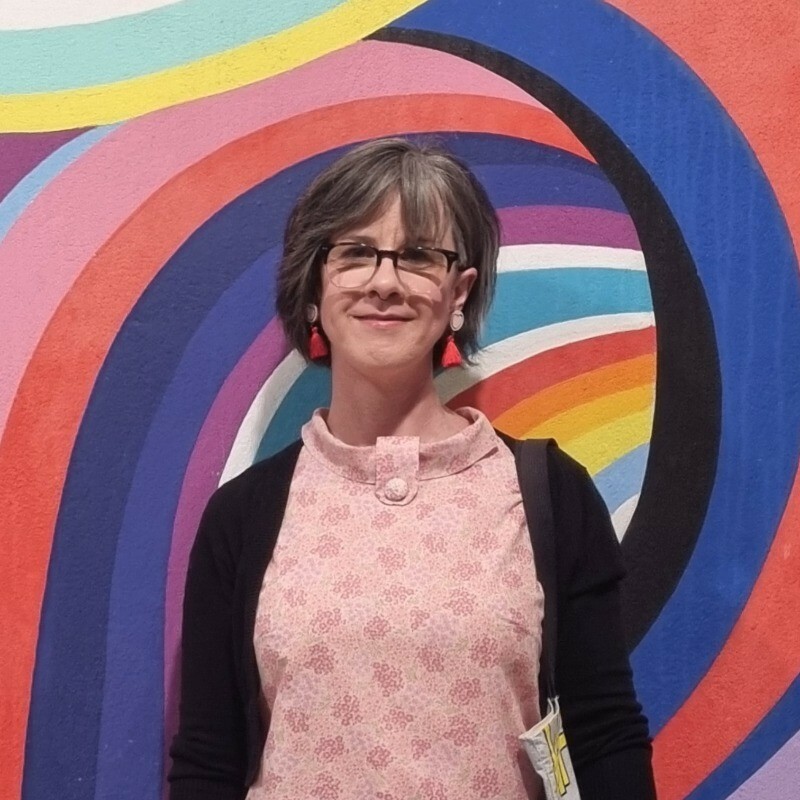 | | Hannah Fairlamb is a final year PhD candidate looking into the relationship between grassroots music-focused gender equality interventions and DIY music scenes in Australia. Prior to her candidacy Hannah worked in social and gender policy in the South Australian public sector for almost ten years. In 2018 Hannah was part of the founding team that created the Adelaide (South Australia) chapter of feminist community music not-for-profit Girls Rock! and was a co-director for four years prior to moving to Melbourne. Coming out of 20 years' involvement in the independent music scene in Adelaide, as an audience member, musician and activist, Hannah's research interests focus on gender, feminism and activism in Australian music scenes.
| 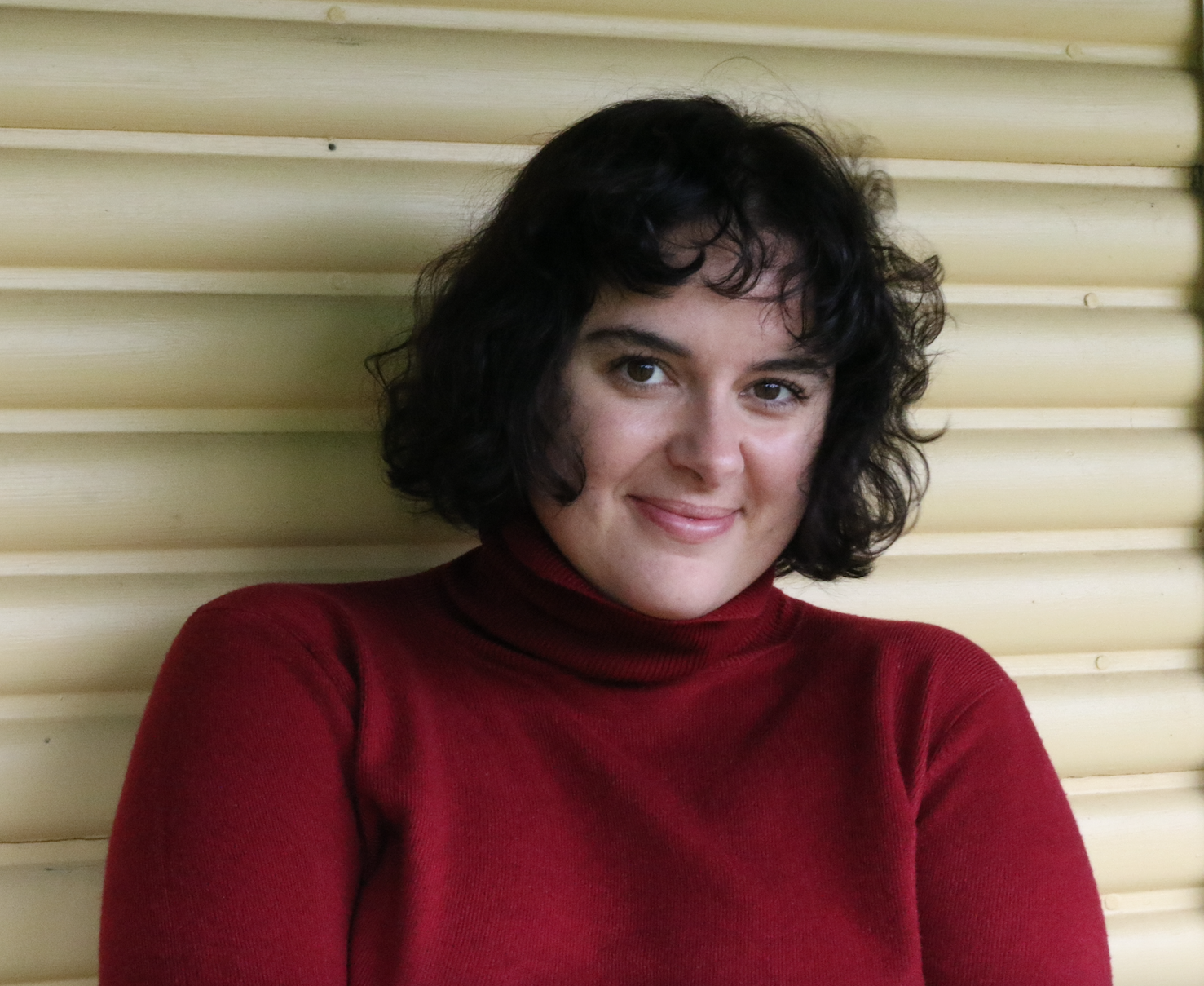 | Christie Bosworth is a final year PhD researcher from the University of Wollongong. Her thesis ethnographically explores the importance of grassroots music communities for democratisation and diversification of music culture, as a resistance to global homogenisation processes, using the Wollongong music ecosystem as a case study. More broadly, her research investigates challenges of the contemporary arts sector, including issues of creative labour and cultural policy, and the need for transformation of the music sector in the future for cultural democracy. Outside of her PhD, she has contributed towards other music research projects and has been embedded in the music industry through work for both the Live Music Office and Sound NSW. Her research is shaped by over 20 years of experience as an artist in the dance and music industries.
| | |
Applications are invited for the editorship of Health Sociology Review (HSR) for the three-year term 2027 - 2029.
Transition arrangements will begin later in 2026, although the content for the first issue of 2027, and possibly the second, will be finalised by the out-going editorial team.
The application deadline is Monday 22nd June, 2026.
The full details of the call are available on TASAweb here.
|
The latest special issue of the Journal of Sociology is titled Journal of Sociology: 60 years on. In this anniversary editorial Editors-in-Chief Ashley Barnwell and Signe Ravin (picture left) look back to the early days of the journal as they sought to honour its history and legacy. They outline the contents of the special anniversary features curated for this issue, including a section of shorter articles engaging with Alan Davies’ article on “children’s outlooks” in the first issue of the journal; an interview with Professor Fran Collyer about the history of sociology in Australia; and a section featuring six shorter articles by current PhD students engaging with articles from the journal’s rich archive. Lastly, they introduce the standard articles also published in this issue: four original articles which all centre Indigenous lives.‘
All articles of the special issue are available here.
| | | Special Sections
The Journal of Sociology has a section called Special Sections. Proposals are welcome at any time for thematic sections that consist of three or four standard 8,000 word papers, framed with a 4,000 word introduction. This will be an ideal format for developing and publishing outcomes from, for instance, a conference panel, a smaller research network, or papers in conversation around a hot topic. Special Sections are designed to be a smaller, more manageable version of a special issue and will feature in standard issues along with regular papers.
If you would like to pitch a special section, please write firstly to JoS's Managing Editor, Dr Amy Vanderharst.
| Visiting Professor of Australian Studies 2027
Graduate School of International Studies, Seoul National University
Commencement of position: February 2027
Conclusion of position: December 2027
Closing date for applications: 13 April. Read on...
Sociology Professor with tenure, Associate Professor with tenure or Assistant Professor with tenure or Assistant Professor(tenure-track) or Associate Professor (tenure-track)
Faculty of International Research and Education, Waseda University, Japan
Closing date for applications: 31 March. Read on....
| Other Events, News & Opportunities
| New: Harmony Week Community Lunch and Cultural Performances
Fellow member Simone Marino is a researcher in ageing and dementia. Simone develops music engagement programs for migrants, with and without cognitive decline, using culturally meaningful songs and storytelling to support wellbeing, social connection, identity, and dignity in later life. he will be performing during Harmony Week
Wednesday, March 18 from 11:30 am to 2:00pm, Perth. Read on...
| New: Opportunity for ECRs and HDRs
ABC Radio National is once again searching for Australia’s next generation of inspiring research communicators, to take part in this year’s ABC TOP 5 media residencies.
Past TASA member recipients include Barbara Barbosa Neves and Julia Cook.
The ABC TOP 5 gives 15 early career and PhD scholars (five per residency), the chance to spend two-weeks with some of the ABC’s leading journalists and producers
ABC TOP 5 participants receive intensive two-week media training and practical experience, and the aim of the scheme is to enable the selected academics to be the best communicators they can be of their specialist research.
| New: UNSW Social Policy Research Centre’s (SPRC) short course, Understanding Poverty, Inequality and Social Disadvantage in Australia, is returning in 2026 following three sold-out iterations.
5 May to 23 June
Informed by research from the Poverty and Inequality Partnership between SPRC and the Australian Council of Social Service (ACOSS), this seven-week online course examines the causes and consequences of poverty and inequality from an Australian policy perspective.
Convened by fellow member Dr Yuvisthi Naidoo and colleague Associate Professor Bruce Bradbury, the course features academic experts alongside guest speakers with lived experience, and representatives from ACOSS and local government.
| National survey seeking participants
| Sport and physical activity experiences of women/girls/nonbinary people with disability
The survey is intended for woman/girl/nonbinary person with disability aged 16+, regardless of how much sport you do or do not play.
| National Library of Australia Fellowships
Open to researchers in various fields and disciplines, the fellowships offer financial and research support for dedicated time using the library's collections. Providing extended access to Australia's largest cultural collection, National Library Fellowships foster research that produces new knowledge to shape Australia's intellectual landscape and contributes to public understanding of our collections.
| The Rechnitz Fund Grant Program
Academy of the Social Sciences in Australia
This research funding program is intended to support Aboriginal and Torres Strait Islander people to develop their careers as researchers across the social sciences.
Application deadline: 17 April. Read on...
International Center for the Sociology of Religion (ICSOR)
The grants provide residence in Rome for the duration of a week or more to a maximum of two months. The ICSOR apartment (all-inclusive, except for food and insurance) and library will be available to awardees free of charge.
| Symposiums
Influencer Diplomacy
Online, 24 April
Influencer diplomacy operates not only at formal state and institutional levels but also intersects with everyday politics, shaping public discourse and social engagement. Selected papers for this symposium will be considered for a peer reviewed edited collection. As such, only original, previously-unpublished abstracts/papers will be considered.
Abstract submission deadline: 16 March.
| Workshops
Ethics in practice and trauma-aware data collection
Refugee Education Australia
An online guided workshop series for researchers working in fragile contexts – areas like forced migration, gender-based violence, disaster research, anything involving trauma or sensitive data.
18 March, 25 March & 1 April. All 3-5pm AEDT.
Fellow member Phillipa Bellemore will be one of the workshop facilitators.
Migrant Lives in the Age of Artificial Intelligence: Digital Care, Belonging, and the Re-making of Migration Experiences
An international, interdisciplinary research workshop examining the rapidly evolving relationship between migration and Artificial Intelligence (AI).
Online, 17 June
Abstract submission deadline: 15 March. Read on...
| Seminars
ANU School of Sociology Seminar Series
The program for the ANU School of Sociology Seminar Series is now online. All seminars are hybrid, with options to join via Zoom. Please visit the School’s Humanitix page, here, to view and register for upcoming seminars.
Newcastle Youth Studies Centre (NYSC) 2026 Online Seminar Series
The full 2026 program for the Newcastle Youth Studies Centre’s online seminar series is now out (see below), you can check out each seminar, and register for them, at the NYSC Eventbrite page here.
Note, you can watch the full 2025 recordings at the NYSC's YouTube playlist here.
| | New: Mapping Deathways — Environmentally, Digitally, and through Repatriationscapes
March 20, 8:00am - 9:30am (GMT)
Explore death across physical, digital, and symbolic landscapes. This webinar examines eco-grief, digital afterlives, and repatriation practices, showing how environmental crises, technology, and migration shape contemporary deathways and cultural memory.
Speakers include fellow member Tamara Borovica.
This event is for Academics, students, practitioners, and anyone interested in how death intersects with environment, technology, and migration. Expect engaging discussions on how ecological crises, digital memorialisation, and repatriation reshape memory and belonging across global and post-colonial contexts.
| | | Conferences
Sport, Politics, and Society
The Tunisian-Mediterranean Association for Historical, Social and Economic Studies (TMA for HSES) and the Tunisian World Center for Studies, Research, and Development (TWC for SRD)
December 1, 2, 3 / 2026 (Beja - Tunisia).
Digital and Sexual Citizenship in an Age of Social Media Bans: Interrogating the Rights of Children and Young People
Initiative of the ECU Ethical Digital Futures Group
6-8 July, Perth, in-person only
Abstract and/or panel proposal deadline: 20 April. Read on...
Temporalities: The Sixth Annual Critical Femininities Conference
Online, August 7 - 9
The Critical Femininities Network invites abstracts from scholars, researchers, activists, and artists
Submission deadline: TOMORROW 13 March. Read on...
Toward an Intelligent Society: Challenges & Opportunities” [Human Intelligence(s) vs. Artificial Intelligence]
University "Fehmi Agani" Gjakove, KOSOVO
Hyrbid, 22-23 May
Religion as a Weapon of War: in the past, present and future
World Conference for Religio. us Dialogue and Cooperation
June 22-26. 2026, Skopje, North Macedonia
Abstract submission deadline: 15 April. Read on...
BSA Annual Conference 2026: 75 Years of Sociology
University of Edinburgh, UK
8-10 April.
| Call for Editors
Journal of Intercultural Studies - call for Associate Editors
Applicants with expertise in cultural studies and postcolonial literature; decolonial studies; race/ethnicity/migration studies are encouraged to apply. Our Associate Editors are based in different locations around the world - applicants from diverse geographies are encourged. Feel free to reach out to the current editors-in-chief if you have any specific queries.
Expression of Interest deadline: 20 April. Read on...
| Call for Submissions
Further Locating Masculinities in Gender, Work and Organisational Contexts
Gender, Work and Organization
Contributions that further delineate the relationships between masculinities and work and organisations are encouraged. Avoiding siloing, such analysis can continue dialoguing with feminist and queer perspectives on masculinities, as well as creating continuities with the ‘pro-feminist men’s movement’.
Abstract submission deadline: 15 March. Read on...
Social Conditions, Clinical Logics: Rethinking Young People’s Engagement with Drug Treatment
International Journal of Drug Policy
This special issue invites submissions that explore or examine how the social conditions of young people’s substance use shape their engagement in drug treatment. Editors are looking for papers that critically explore, among other things, biomedical and psychologised approaches to AOD care, how contexts of crisis and social inequity shape treatment experience, and how treatment might be experienced differently by First Nations, LGBTQ+, refugee, migrant and racialized youth.
Serendipities. Journal for the Sociology and History of the Social Sciences
If you would like to propose a special issue for their collection, please feel free to discuss this with the Managing Editors. If your ideas are further advanced, you are welcome to send them a one-to-two page proposal.
Managing Editors:
- Fran Collyer, University of Wollongong Australia, Fran@francollyer.com
- Kristoffer Kropp, Roskilde University, Denmark, kkropp@ruc.dk
You can find more information about our journal here.
Professionalism beyond the Global North: A Space for New Theoretical Developments
Current Sociology Monographs
This issue invites contributions that advance sociological research on professions, professionalism, and expertise in the Global South—broadly defined to include Africa, Asia, Latin America, Southern and Eastern Europe, and Oceania
Humanities and Social Sciences Communications
The guest editors of this journal are seeking submissions for the forthcoming edition ‘Reframing artificial intelligence: Critical perspectives from AI social science’
In an era increasingly shaped by artificial intelligence (AI), public and academic discourse is often dominated by polarised narratives—either heralding AI as a solution to complex problems or warning of its dangers … this Collection invites social science perspectives to advance the study of AI’s sociotechnical, cultural and political dimensions.
Submission deadline: 30 April. Read on...
| For membership information, processes, and frequently used resources, visit the Members' Navigator. To contact a member of the team directly, see our TASA Staff page. | Admin (Sally): admin@tasa.org.au
Events (Penny): events@tasa.org.au
Membership (Ali): membership@tasa.org.au
Digital Publications Editor (Roger): digitalpe@tasa.org.au
Thematic Groups (Molly): thematicgroups@tasa.org.au
Postgraduates (Brooklyn): postgraduates@tasa.org.au | |